Posts

Bringing John Paul II into Couples’ Communication
by Dr. Emily Dowdell

One of the reasons I am excited to be a part of the RWPS team is our commitment to making the philosophy of Pope St. John Paul II and his Theology of the Body more accessible. One area in which we do this is in marital therapy. 

Couples experiencing marital distress are almost always struggling with a breakdown in communication. One or both parties feel misunderstood, and they often find themselves in a power struggle. When couples get locked into these cycles of interaction, they lose sight of their shared humanity, and the love they have for one another. Each person digs their heels into their own individual experiences and demands authority. Many times, the desire for power or authority comes from a deeper desire to be known, heard, and understood at the heart of which is a longing for closeness and a fear of rejection or abandonment. When working with couples who run into these struggles, I often provide this analogy: 

Imagine you and your significant other are standing at the top of a long driveway at dusk. You can’t quite make out what’s happening at the bottom. You see two figures walking past the lamppost and share your observations with each other. One of you sees a couple on a nice evening stroll, the other fears someone is being stalked and in danger.  The two of you argue about who is right, adamant about your observations and opinions. You stay at the top of the driveway and try to convince one another that you really know what’s going on down there. Yet, neither of you have enough information. If we strip away the power struggle, we might have a more balanced interaction. Instead of arguing about who is right, you might be curious about each other’s perceptions. When you seek to understand the other person’s perspective, you might learn that the one who feels fear was once assaulted from behind. The one who saw an evening stroll finds going for walks in the evening romantic. After learning about each other and why you see the world as you do, you might decide to get a little closer to find out what is really going on at the bottom of the driveway.  As you get closer, you could discover that you were both wrong, and it was your neighbor and his son walking their dog. 

In this event, there is an opportunity for the spouses to learn more about one another and their shared reality. One of the beautiful things about the philosophy of Pope St. John Paul II is that he made space for subjective experience without denying objective truth. Some philosophies that aim to honor individual experience can go to an extreme and abandon the notion of an objective reality— we see this in the common phrase “follow your truth” and other mottos based in moral relativism. On the other hand, other philosophies are more rigid about following the rules and impose an objective framework that fails to take into account each person’s subjective experience.  Pope St. John Paul II found a way to recognize the both—and. He affirmed the unique experiences that form our individual thoughts, beliefs, and opinions and asserted that we are interacting with an objective, shared reality. We have a moral obligation to pursue truth and to refrain from treating others as an object, yet we also must respect and honor each other’s subjectivity. 

When we orient ourselves to the pursuit of objective truth — about ourselves and others — in a way that respects our subjective viewpoints, we can experience more harmonious relationships and experience more interior freedom and peace. As in the example above, instead of becoming entrenched in protecting one’s ego, defending oneself and one’s view as “correct” and alienating one’s significant other in the process, we can take a curious stance with oneself, one’s spouse, and the shared reality. In doing so, one might come to realize that, while one’s assumptions about reality were inaccurate, they were coming from a lived experience, thus not invalid. Becoming entrenched in one’s own view becomes problematic when one lacks insight into one’s perspective, presumes to have all the answers, cites assumptions as facts, and refuses to dialogue with oneself, others, and the world.   

If I am approaching a conversation with my husband looking for a certain response — perhaps I am looking for support, validation, or encouragement — and he does not respond in the way I expected, this can indeed be quite disappointing. I might spiral into thoughts about what this means about our marriage or become angry because I feel entitled to the response I wanted.  If instead, I have the awareness to recognize my need, see that I was treating my husband as a source of need-fulfillment, and instead seek to treat him as a person, this changes the dynamic. I can recognize my need, acknowledge my disappointment, and be curious about both of our reactions. I wish I was always able to “put my bags down” in conversations and focus on the good of the other, but sometimes it’s really hard. 

If you or your spouse is struggling to communicate, becoming overwhelmed with strong emotions in conversation, and is unable to be curious — it may be a sign of woundedness and a source of difficulty in your life. There is likely a lot of pain and suffering there, which deeply needs compassion. We are here to help.  By learning to understand yourself and your spouse more deeply, as well as healing underlying wounds that trip us up in our relationships, the RWPS team will walk with you as you seek the healing and growth in your capacity for love. It is also important to remain compassionate with yourself and your spouse through these struggles. We all struggle in our vocations and need the healing power of God’s grace and the support of others to live our vocations fully and faithfully.  In our struggles, we find the prayer of St. Francis a helpful reminder of our calling to seek the good of the other: “O divine Master, grant that I may not so much seek to be consoled as to console, to be understood as to understand, to be loved as to love.” 

 

Dr. Emily Dowdell, the Latest Therapist to Join the RWPS Team

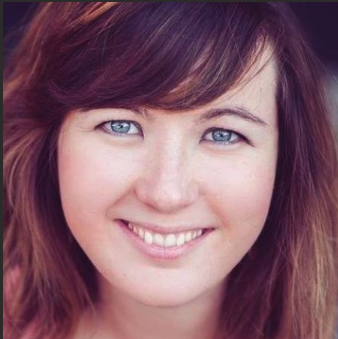
We are excited to announce the addition of Dr. Emily Dowdell to the RWPS team.  She brings with her an exceptional training background, solid Catholic formation, and unique clinical experience.  Dr. Emily will be seeing patients at our main office on the West Side of Cincinnati.  She recently sat down with us to share a bit about herself. 

Q:  Can you tell us about yourself?

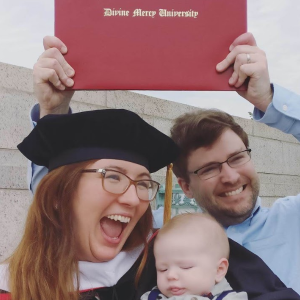
I’m Dr. Emily Dowdell. I’m originally from Rhode Island, born and raised Catholic.  I am currently married with three boys under four years old.  I earned a bachelor’s degree in multimedia communications with minors in film studies and theology from Franciscan University of Steubenville. After college, I returned to Rhode Island where I worked as a barista, rock climbing instructor, dog walker, trivia hostess, and freelance graphic designer while building my own wedding photography business. Just as my photography business took off and I had booked twenty-three weddings for the year, the Lord had other plans… He introduced me to the Institute for the Psychological Sciences at Divine Mercy University in Virginia. 

During my doctoral training in psychology, I worked in a variety of settings. My first experience was providing social skills training to youth and adults with severe autism in a community integration program. I then went on to work with adolescent girls, providing groups and individual treatment in a residential addiction program through Phoenix House. I spent a year focusing on diagnostics and assessments at the Psychiatric Institute of Washington, a private psychiatric hospital in D.C.

For my internship and postdoctoral years, I was a fellow at Riverview Psychiatric Center the primary state hospital for the state of Maine. While there I had the opportunity to work with both civil and forensically committed individuals with more extreme psychiatric conditions. I facilitated groups, provided individual therapy, and offered psychological testing.

I went on to work with the CatholicPsych Institute in their Rhode Island office providing individual therapy and mentorship. There I became the Director of Assessments, offering psychological testing for diocesan and religious discerners.

Q:  What inspired you to become a psychologist?

I was fortunate to participate in Franciscan University’s study abroad program in Austria. While staying in an old Carthusian Monastery, I had the opportunity to study philosophy and travel to many spiritual pilgrimage sites. I learned about Pope Saint John Paul II’s philosophy of the human person that inspired Theology of the Body and read Viktor Frankl’s book, Man’s Search for Meaning. Learning about the dignity of the human person as created in the image of God was huge for my own self-understanding in early adulthood. When I heard about the Institute for the Psychological Sciences at DMU and how their program is designed to integrate the science of psychology with a Catholic view of the human person, I was very intrigued. Finally, I had found an opportunity to learn how to help others learn about and cooperate with their innate dignity.

Q:  What does it mean to you to integrate the practice of psychology and the Catholic faith?

My faith informs everything I do and how I see the world. It’s important to acknowledge that every approach to psychology has philosophical roots and an understanding of what it means to be human at its core. The Catholic vision of the human person offers a more holistic foundation, incorporating the person’s mind, body, and spirit. I want to see and work with the whole person, so it gives me a more balanced perspective when one aspect of the person’s life is out of sync. When working with clients who are or have experienced significant pain and suffering, my faith provides meaning. It anchors the work and gives me the hope I need to continue moving forward. My faith provides me greater clarity, orients me, and gives me a framework to better understand my clients. I ultimately entrust the Lord with the care of my clients and pray that they are receiving what they need at this time to move forward, toward becoming who God made them to be. 

Q:  What types of patients and difficulties do you treat?

Over the course of my training and experience I have provided individual, group, family, and marital therapy. I am most in my element working with individuals (adolescent through older adulthood) as they navigate a variety of challenges including: depression, anxiety, grief and loss, adjustment related issues, post/peripartum disorders, relational issues, vocational and identity concerns, trauma-related disorders, substance use and other addiction, and personality disorders.

Q:  How would you describe your approach to therapy?

I approach therapy primarily from a relational perspective, meaning I focus on building a relationship with my clients. In terms of practice and conceptualization, I integrate different theories and tools from psychodynamic schools of thought (Nancy McWilliams, Lorna Benjamin, Peter Fonagy, Edward Teyber) and evidence-based treatments like Cognitive Behavioral Therapy, Acceptance and Commitment Therapy, and Mindfulness. Regardless of the specifics, therapy always comes back to the individual. As we build our relationship, we will establish goals, and I will select the most relevant approach that suits the person and his or her individual needs.

Q:  What do you like to do for fun? 

For fun, I like to spend time with my three kids and husband. We enjoy spending time outdoors together and going on little adventures. I also enjoy knitting.

To learn more or to make an appointment with Dr. Emily, please call 513-407-8878.

Happy Birthday Papa
by Dr. Andrew Sodergren

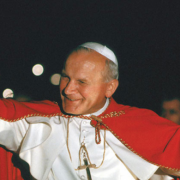
This May 18th is the 100th anniversary of the birth of our beloved Pope St. John Paul II.  Typically, only people who have had a truly historic impact have their birthdays celebrated long after they are deceased.  John Paul II was one such historic person.  I would like to reflect briefly on some of the long-lasting impact he has had and will continue to have on the Church as well as some of the impact he has had on me personally.

For many younger people today, it is difficult to truly appreciate the immensity of John Paul II’s impact on the Church.  To put his pontificate in context, we have to recall the significance of the Second Vatican Council (1962-1965).  Ecumenical councils are rare and only called when the Church needs to face major challenges in its mission.  Vatican II, as it is often named, was in many ways an attempt to bring the First Vatican Council to completion as it was cut short by the Franco-Prussian war.  The scope of Vatican II was immense:  nothing less than reexamining the relationship of the Church with the modern world.  As a newly ordained auxiliary bishop and later Archbishop of Kraków, Karol Wojtyła participated in all four sessions of the Council.  His stature and reputation as an outspoken, courageous young bishop of immense intellect grew to the point where he was appointed to the committee that drafted what became perhaps the Council’s defining document, the Pastoral Constitution on the Church in the Modern World (Gaudium et spes).  

Inspired by this experience, Archbishop Wojtyła became the only participating bishop to write an entire book summarizing the teaching of the Council and giving guidelines for its implementation (Sources of Renewal).  Not long after, Pope Paul VI named him a Cardinal of the Church, perhaps as a way of thanking him for his contributions at the Council and for serving as a key theological advisor in preparing the encyclical letter Humanae vitae (1968), which dealt with thorny questions concerning marriage, sexuality, and birth control and reaffirmed the traditional Catholic teaching that sexuality is meant to unite a man and woman in marriage and must always be open to life. 

It is difficult today to imagine the shock that the Church and even the world experienced when Cardinal Wojtyła was elected to the papacy in October 1978 and took the name John Paul II.  He was the first non-Italian Pope in 455 years, and he hailed from – at that time – a communist country (Poland).   This alone would make his an historic pontificate, but it was only the beginning.  Whereas his predecessor, John Paul I, reigned for merely a month, John Paul II reigned for over 26 years, making his the third longest pontificate in the history of the Church.  He accepted his mission from Christ to serve as the Church’s principal interpreter and implementer of the Second Vatican Council as well as to lead the Church into the Third Millennium.  He did so with courage and faithfulness.

There is hardly an aspect of the Church’s life that was not impacted in significant ways by the teaching and leadership of this saintly Pope.  Under his guidance, the Church produced a new Code of Canon Law governing all major aspects of ecclesial life.  Later came the Catechism of the Catholic Church, the first universal catechism since the Council of Trent.  It will remain for generations “a sure norm for teaching the faith.”[1]  Among his many gifts to the Church include is 14 encyclical letters, 14 apostolic exhortations, and thousands of speeches, audiences, and other documents.  His writings covered everything from the Persons of the Trinity; evangelization; the dignity of the human person; social issues such as the dignity of work, distribution of resources, and human rights; priests, bishops, consecrated religious, and the laity; marriage and family; the Eucharist; Mary; the rosary; sin, mercy, and reconciliation; fundamental principles for morality; and much more.  Incredibly, he canonized 482 new saints and beatified 1338 new blesseds.  He gave us the Luminous Mysteries of the rosary and instituted Divine Mercy Sunday.   Liturgically, he oversaw the reform of the reform, so to speak, which culminated in the publication of the third edition of the Roman Missal, which we use today.  Then, there is his pivotal role in the fall of Communism in Poland and across Eastern Europe.  The list goes on.

Of course, we at Ruah Woods are especially indebted to him for his Theology of the Body, which he gave to the Church at his Wednesday general audiences in the early years of the pontificate as well as the founding of the Pontifical John Paul II Institute for Studies on Marriage and Family and the Pontifical Council for the Family.[2]  These gifts were meant to help the Church proclaim the nature and dignity of the human person, love, marriage, and sexuality in these confusing, uncertain times. 

For me, personally, I regard myself as a “JP2 Catholic.”  I was actually born during the interregnum, i.e., the time between the death of John Paul I and the election of John Paul II.  I had little awareness or appreciation of John Paul II until, as a college student, I began to learn more about him and his teachings.  My wife and I were blessed to be taught by a priest who earned his doctorate at the John Paul II Institute as we were preparing for marriage.  We read John Paul II’s documents on marriage and family at that time and were taught aspects of Theology of the Body in class with other young people.  We fell in love with the Church’s vision for marriage and family as expressed through the Pope’s writings.  For me, it became my principal inspiration for becoming a Catholic psychologist.

In graduate school, I immersed myself in studying John Paul II’s teaching.  As an aspiring Catholic psychologist, I wanted to understand the human person as he did.  I studied all of his encyclicals and many of his other papal documents, books, and pre-papal writings.  I took graduate seminars on his thought, including Theology of the Body.  The more I read of his teaching, the more I wanted to know, and the more I fell in love with this man.  He became for me a spiritual and theological mentor.  Even more, as I read his thought, I felt a closeness to him.  He became a father-figure for me who was teaching me how to see the world, how to live, and how to be a Catholic man in the Third Millennium. 

Even today, I regularly read and re-read his writings for my own personal and professional enrichment.[3]  I pray to him daily, seeking his intercession to be the man, son, husband, father, and psychologist I am called to be.  He is my teacher, my guide, my father, and my friend.  For the last 10 years or so, I have been blessed to serve as an adjunct professor at the Washington, DC branch of the John Paul II Institute.  When I go to Washington to teach, I always make a visit to the St. John Paul II National Shrine to visit the museum of his life and venerate his relic.  Those visits move me to tears of gratitude.  Truly, I would not be who I am today – perhaps not even Catholic – without the life, witness, and teaching of Pope St. John Paul II.  With deep affection, happy birthday, Papa!


[1] John Paul II, apostolic constitution Fidei depositum.

[2] The Pope officially founded these two new entities on May 13, 1981, the same day he was shot by his would-be assassin, Mehmet Ali Agca.  May 13, of course, is the feast of Our Lady of Fatima who had given the three children of Fatima a vision of a pope being gunned down decades earlier.  John Paul II believed that he was saved by Mary’s hand.

[3] Currently, I am working my way through his general audiences from the years after Theology of the Body during which he gave a systematic catechesis on all the articles of the Creed.